The Ultimate Guide to Portable Vibrometer in the UK
Key Takeaways
- A portable vibrometer provides immediate, on-site diagnostics for rotating machinery, translating physical oscillations into readable condition metrics.
- Understanding displacement, velocity, and acceleration is critical for diagnosing specific faults ranging from simple unbalance to complex bearing degradation.
- Compliance with UK standards, specifically BS ISO 20816, ensures your maintenance protocols meet industry benchmarks for machine health.
- Selecting the correct measurement parameter and mounting technique dictates the accuracy of your readings, especially in demanding environments like UK manufacturing plants and NHS estate plant rooms.
- Integrating a reliable mechanical vibration tester into routine checks drastically reduces unplanned downtime and extends asset lifecycles under PUWER regulations.
Unplanned machinery downtime remains a critical bottleneck for British industry. When a crucial pump seizes in a water treatment facility or an extraction fan fails on a factory floor, the financial repercussions compound by the minute. Reactive maintenance—waiting for a machine to break before fixing it—is no longer a viable strategy for modern engineering and facilities management teams. The solution lies in proactive condition monitoring, and the frontline tool for this task is the portable vibrometer.
By capturing mechanical oscillations and converting them into actionable data, these handheld instruments allow engineers to peer inside a machine without dismantling it. They serve as an early warning system, detecting microscopic changes in machine behaviour weeks or even months before catastrophic failure occurs. Whether you are managing the HVAC systems of an NHS hospital trust or overseeing a CNC machining line in the Midlands, mastering vibration analysis is foundational to operational efficiency.
"A 2022 report by Senseye, the UK-based predictive maintenance specialist, revealed that unplanned equipment failure costs large industrial facilities an average of £40,000 per hour, highlighting the urgent need for robust condition monitoring strategies."
This comprehensive guide explores the engineering principles behind vibration measurement, practical deployment strategies across British industrial sectors, and how to interpret the data to keep your critical assets running smoothly.
What Exactly is a Portable Vibrometer?
At its core, a portable vibrometer is a diagnostic instrument designed to measure the vibration severity of mechanical equipment. Unlike permanent, hard-wired condition monitoring systems that stream continuous data to a central server, portable units are designed for route-based maintenance and rapid, on-the-spot troubleshooting.
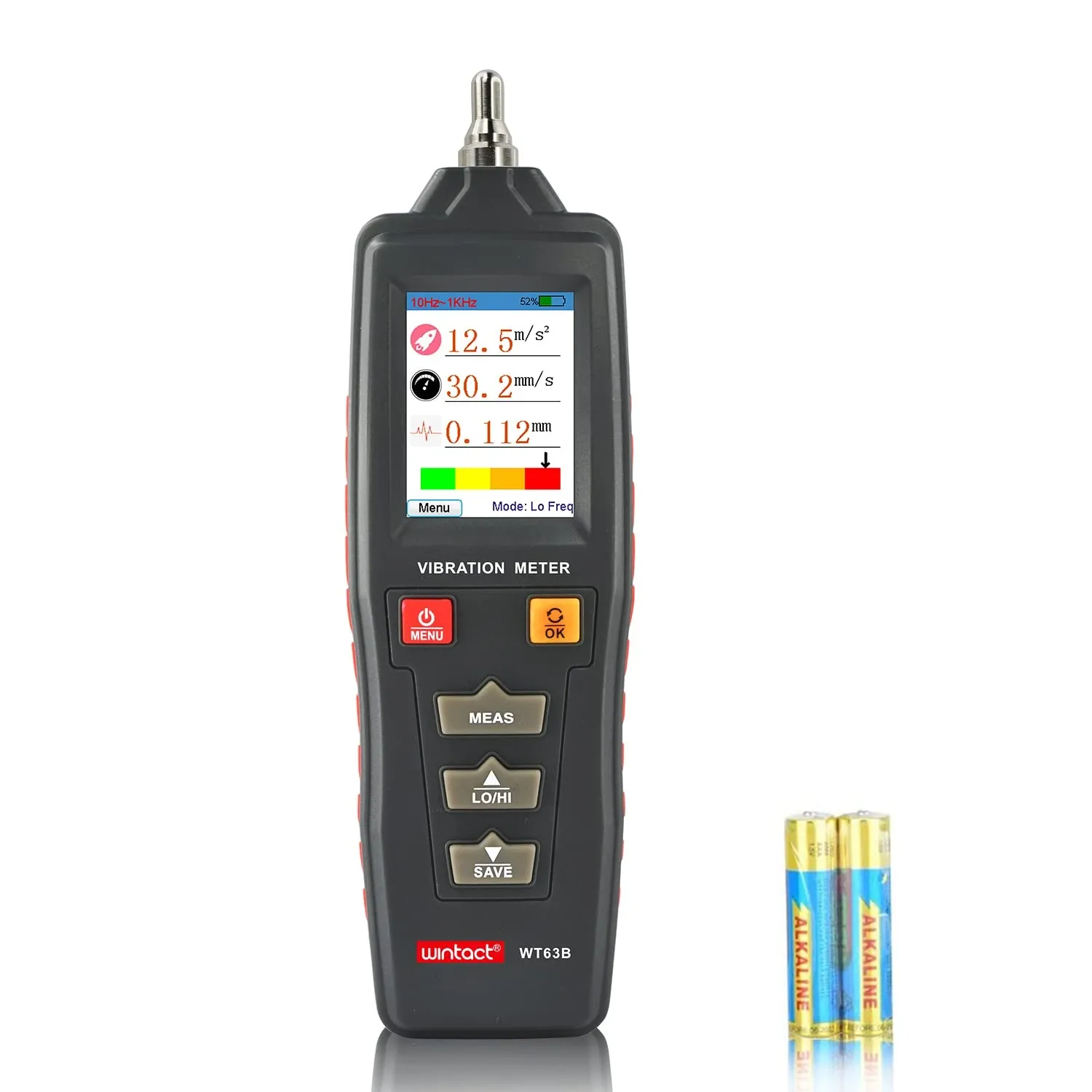
The architecture of a standard portable vibrometer consists of three primary components:
- The Transducer (Sensor): Usually a piezoelectric accelerometer, this component physically contacts the machine. It contains a piezoelectric crystal that generates a tiny electrical charge when subjected to mechanical stress (vibration).
- The Signal Conditioner and Processor: The internal circuitry amplifies the weak electrical signal from the transducer, filters out unwanted electronic noise, and mathematically converts the raw voltage into standard units of measurement (such as mm/s or g).
- The Display Interface: The screen provides the engineer with an immediate readout of the vibration levels, often categorised by colour-coded alarms based on international standards.
Modern iterations have evolved from simple "overall vibration" pens into sophisticated diagnostic tools. They now function as a highly reliable mechanical vibration tester capable of storing historical data, performing frequency analysis, and transferring readings to asset management software.
The Science of Vibration Measurement
To use a portable vibrometer effectively, one must understand the three fundamental parameters of vibration. Each parameter is sensitive to different frequency ranges and points to specific types of mechanical faults.
1. Displacement (Measured in µm or mils)
Displacement measures the total distance the vibrating part moves from one extreme to the other (peak-to-peak). It is most effective for low-frequency vibrations, typically below 10 Hz (600 RPM). Displacement is rarely used for general machine health monitoring today, but it remains crucial for balancing large, slow-moving rotors, such as cooling tower fans or hydroelectric turbines.
2. Velocity (Measured in mm/s)
Velocity measures the speed at which the displacement occurs. It is the gold standard for general machine health monitoring and is the parameter cited by British Standards (BS ISO 20816). Velocity provides the best indicator of fatigue-inducing energy within the mid-frequency range of 10 Hz to 1,000 Hz (600 to 60,000 RPM). When engineers talk about a machine "running rough," they are usually referring to high vibration velocity. Common faults detected in this range include unbalance, misalignment, and mechanical looseness.
3. Acceleration (Measured in g or m/s²)
Acceleration measures the rate of change of velocity. It highlights high-frequency events, typically those above 1,000 Hz. Because the electrical output of a piezoelectric sensor is proportional to acceleration, this is the rawest form of data collected by the vibrometer. Acceleration is the critical parameter for detecting early-stage rolling element bearing defects and gear mesh issues. Long before a bearing exhibits high velocity (which indicates imminent failure), it will generate high-frequency acoustic stress waves measurable as acceleration spikes.
Diagnosing the Four Pillars of Machinery Faults
A portable vibrometer does more than tell you a machine is vibrating; it helps pinpoint why. By analysing the frequency at which the highest vibration occurs (often expressed as multiples of the machine's running speed, or Orders), engineers can identify specific mechanical defects.
Unbalance
Unbalance occurs when the centre of mass of a rotating rotor does not align with its centre of rotation. This is akin to a washing machine on a spin cycle with an uneven load. A portable vibrometer will show a dominant vibration peak exactly at 1X RPM (one times the running speed). Unbalance is typically corrected by adding or removing weight from the rotor.
Misalignment
Even with laser alignment tools, thermal growth or foundation settling can cause shafts to drift out of alignment. Misalignment typically presents as high vibration in both the radial and axial directions. The vibrometer will often display strong peaks at 1X, 2X, and sometimes 3X the running speed. Catching this early prevents premature coupling wear and bearing failure.
Mechanical Looseness
Looseness can be structural (a loose holding-down bolt on a baseplate) or internal (excessive bearing clearance). Structural looseness often generates a high 1X RPM reading, similar to unbalance, but is highly directional. Internal looseness creates a complex vibration profile with multiple harmonics (1X, 2X, 3X, 4X, etc.) and a raised noise floor on the spectrum.
Bearing Degradation
Rolling element bearings are the most common point of failure in industrial machinery. As bearings wear, they pass through four distinct stages of failure. A high-quality portable vibrometer measuring acceleration can detect Stage 1 and Stage 2 wear—microscopic pitting on the raceways—long before the bearing generates audible noise or heat. This gives maintenance teams weeks to procure a replacement and schedule a controlled shutdown.
Key Applications Across British Sectors
The versatility of the portable vibrometer means it is deployed across almost every sector of the UK economy. The operational context dictates how the tool is used and what tolerances are acceptable.
Manufacturing and CNC Machining
In precision manufacturing hubs across the Midlands and the North of England, machine tool spindles operate at incredibly high speeds. Even minute vibrations can cause "chatter," ruining the surface finish of a machined component and leading to costly scrap. Regular checks with a portable vibrometer ensure spindles run true and tooling remains within tight tolerances.
Facilities Management and NHS Estates
Large commercial buildings and critical infrastructure rely on complex heating, ventilation, and air conditioning systems. An unexpected failure of an air handling unit (AHU) in an operating theatre can halt surgeries. Facilities managers utilise specialised tools to monitor these massive fans and pumps. For a deeper dive into this specific application, read our comprehensive HVAC vibration meter buyer's guide, which details how to monitor belt-driven fans and chilled water pumps efficiently.
Water and Wastewater Treatment
The UK water infrastructure relies heavily on massive centrifugal pumps and aeration blowers running 24/7. These assets are subjected to cavitation, variable loads, and harsh environmental conditions. Routine route-based monitoring using a dedicated motor vibration tester allows engineers to track bearing health and plan pump overhauls during low-demand periods, ensuring continuous supply and preventing environmental breaches.
Navigating UK Standards: BS ISO 20816
Taking a vibration reading is only half the battle; interpreting that reading against an accepted baseline is where true condition monitoring begins. In the UK, the benchmark for machine vibration severity is governed by the British Standards Institution (BSI).
Historically, engineers relied on ISO 10816. This has recently been superseded by BS ISO 20816-1. This standard provides evaluation criteria for the vibration of various machine types, measured on non-rotating parts (like bearing housings).
The standard categorises machine health into four distinct zones based on the RMS (Root Mean Square) velocity reading in mm/s:
- Zone A (Green): Vibration of newly commissioned machines. Optimal condition.
- Zone B (Amber/Green): Acceptable for long-term continuous operation. Normal wear is occurring, but no immediate action is required.
- Zone C (Amber): Unacceptable for long-term continuous operation. The machine may be operated for a limited period until a suitable opportunity arises for remedial action. Maintenance should be scheduled.
- Zone D (Red): Vibration values are high enough to cause severe damage. Immediate shutdown and repair are strongly advised.
A reliable portable vibrometer will often have these ISO charts built into its software, automatically classifying the reading based on the machine class (size and mounting type) entered by the user. Furthermore, regular vibration monitoring aligns perfectly with the requirements of the Provision and Use of Work Equipment Regulations 1998 (PUWER), which mandates that UK employers must keep equipment maintained in an efficient state, in efficient working order, and in good repair.
The Critical Importance of Sensor Mounting
The accuracy of your portable vibrometer is entirely dependent on how the sensor is coupled to the machine. Poor mounting techniques act as a mechanical filter, dampening high-frequency signals and rendering your bearing fault detection useless.
1. Stud Mounting (The Gold Standard)
Drilling and tapping a hole into the bearing housing to attach the sensor via a threaded stud provides the best frequency response, accurately transmitting data up to 20,000 Hz. While impractical for every measurement point on a portable route, it is highly recommended for critical, high-speed machines.
2. Magnetic Base (The Practical Compromise)
For route-based monitoring, a rare-earth magnetic base attached to a flat, clean surface is the industry standard. A dual-rail magnet provides excellent stability on curved surfaces (like motor casings) and can reliably transmit frequencies up to 5,000 Hz. Always ensure the mounting surface is free from thick paint, rust, and debris, as these act as insulators against high-frequency vibration.
3. Handheld Probe / Stinger (Use with Caution)
Many basic vibrometers come with a pointed stinger probe. While convenient for reaching tight spaces, handheld probes are highly susceptible to user error. The angle and pressure applied by the engineer alter the reading, and the stinger itself typically dampens any frequency above 1,000 Hz. Probes should only be used for low-frequency unbalance or misalignment checks, never for early-stage bearing diagnostics.
How to Conduct a Fast, On-Site Machine Health Check
Implementing a successful vibration monitoring programme requires consistency. Here is a practical, step-by-step workflow for UK maintenance engineers conducting route-based checks.
- Establish a Baseline: Never judge a machine on a single reading. Take initial measurements when the machine is newly installed or freshly overhauled. This baseline accounts for the inherent background vibration of the surrounding structure.
- Define Measurement Points: Mark specific measurement locations on the bearing housings. Always mean three axes: Horizontal (sensitive to unbalance), Vertical (sensitive to looseness), and Axial (sensitive to misalignment). Ensure you place the sensor on the exact same spot during every inspection.
- Configure the Vibrometer: Set the device to measure RMS Velocity (mm/s) for overall health, and Acceleration (g) for bearing condition. Ensure the frequency range covers the running speed of the machine and its higher harmonics.
- Take the Readings: Apply the sensor firmly using a magnetic base. Wait for the reading on the display to stabilise before recording the value. Note any abnormal audible noises or excessive heat radiating from the housing.
- Trend and Analyse: Transfer the data to your maintenance log or software. Compare the current reading against the baseline and the BS ISO 20816 limits. An upward trend is far more significant than a single high reading.
Essential Features to Look For in a Portable Vibrometer
If you are upgrading your maintenance toolkit, not all instruments are created equal. The UK industrial environment demands robust, reliable equipment. Consider the following features when evaluating a portable vibrometer:
- Broad Frequency Range: Ensure the device can measure both low frequencies (for unbalance) and high frequencies (up to at least 10 kHz for bearing diagnostics).
- Built-in ISO Alarms: Devices that automatically compare readings against ISO 20816 save time and reduce human error on the factory floor.
- Rugged Build Quality: Look for a minimum IP65 rating to protect against dust ingress and water jets, essential for use in wet processing plants or outdoor HVAC installations subject to British weather.
- Data Storage and Trending: A meter that simply displays a number is useful for a quick check, but a true vibration analyzer must store historical data to establish trends over time.
- Rechargeable Lithium-Ion Battery: Route-based data collection can take an entire shift. Ensure the battery life supports at least 8 to 10 hours of continuous operation.
Equip Your Team with the Right Diagnostic Tools
Relying on guesswork or outdated maintenance practices exposes your facility to unnecessary risk and financial loss. At Vibmeter, we engineer solutions designed specifically for the demands of modern industry.
Experience The Practical Portable Vibrometer & Vibration Analyzer. Designed as a reliable mechanical vibration tester and motor vibration tester, our instruments deliver fast, on-site machine health checks you can trust.
Frequently Asked Questions
What is a good vibration reading in mm/s?
There is no single "good" reading, as acceptable levels depend entirely on the size, mounting type, and power of the machine. However, under BS ISO 20816, a small motor (under 15 kW) on a rigid foundation should typically run below 1.4 mm/s RMS to be considered in optimal (Zone A) condition. Readings above 4.5 mm/s on the same motor would require immediate investigation.
How often should I calibrate my portable vibrometer?
To maintain measurement accuracy and comply with ISO quality standards, it is highly recommended that portable vibrometers and their associated accelerometers are calibrated annually by a certified UKAS laboratory. Regular drop tests or exposure to extreme temperatures can shift the sensor's sensitivity over time.
Can a basic portable vibrometer detect bearing failure early?
A basic vibrometer that only measures overall velocity (mm/s) will not detect early-stage bearing failure. By the time a failing bearing generates enough velocity to trigger an alarm, it is usually in the final stages of degradation. To catch bearing wear months in advance, you need a portable vibrometer capable of measuring high-frequency acceleration or specialized bearing condition metrics (like enveloping or PeakVue).
Do I need specialist training to use a portable vibrometer?
Taking a basic reading is straightforward and requires minimal training. Most modern devices feature intuitive traffic-light systems (Red/Amber/Green). However, interpreting complex frequency spectra to diagnose specific faults requires training. The British Institute of Non-Destructive Testing (BINDT) offers excellent certification programmes (ISO 18436-2) for engineers wishing to master vibration analysis.
Ready to upgrade your toolkit with Vibmeter?
Shop Now — £141.25